 By Admin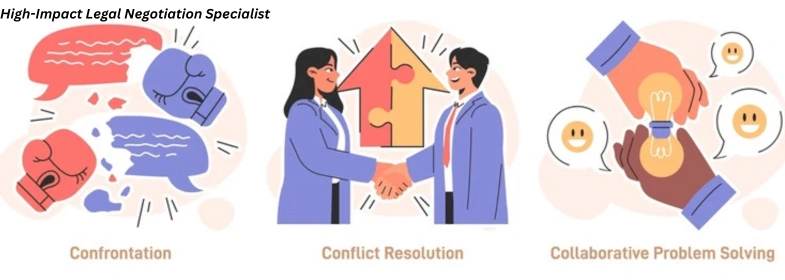
Discover how a High-Impact Legal Negotiation Specialist resolves disputes, protects business interests, and secures win-win outcomes without conflict. Explore strategies, techniques, frameworks, and real-world negotiation insights that help individuals and organizations achieve legally sound, mutually beneficial agreements.
Introduction: The Art of Winning Without Conflict
In today’s increasingly complex legal and business environment, conflicts arise more frequently—and with higher financial, emotional, and reputational risks than ever before. From commercial disputes and contract disagreements to regulatory misunderstandings and stakeholder tensions, conflict is inevitable. Yet destructive conflict is not.
This is where the High-Impact Legal Negotiation Specialist emerges as an essential professional—someone who understands not only the law, but also human behavior, communication psychology, strategy, risk analysis, and the delicate science of peaceful influence.
Unlike traditional negotiators who focus solely on “winning,” a high-impact specialist focuses on winning without conflict—achieving outcomes that are efficient, mutually beneficial, long-lasting, and reputationally safe. These experts transform potential disputes into collaborative problem-solving opportunities, protecting relationships while securing strong legal and economic results.
This article explores, in depth, the complete landscape of high-impact legal negotiation: who these specialists are, what they do, how they create value, and what makes them indispensable in a world where conflict-free resolution is gold.
Section 1: Understanding the Role of a High-Impact Legal Negotiation Specialist
A High-Impact Legal Negotiation Specialist is a professional trained in:
- Legal frameworks
- Negotiation theory
- Conflict resolution
- Strategic communication
- Risk mitigation
- Behavioral psychology
- Mediation and arbitration
- Business and commercial law
- Influence and persuasion
Their core mission:
Resolve disputes and secure agreements with minimal friction, maximum value, and no escalation.
1.1 Why “High-Impact”?
“High-Impact” means they focus on outcomes that:
- Prevent costly litigation
- Protect long-term relationships
- Reduce operational disruption
- Save time, money, and emotional energy
- Build trust and transparency
- Improve organizational reputation
- Turn adversaries into collaborators
They aim for transformational solutions—not transactional wins.
1.2 Why “Winning Without Conflict”?
Conflict-free negotiation doesn’t mean compromising or giving in.
It means:
- Winning strategically, not aggressively
- Using logic and empathy instead of force
- Avoiding positional battles and focusing on interests
- Keeping parties emotionally grounded
- Framing negotiation as joint problem-solving
- Maintaining professionalism even in high-pressure scenarios
This is the future of negotiation.
Section 2: The Psychology Behind Conflict-Free Legal Negotiation
A High-Impact Legal Negotiation Specialist blends legal expertise with deep psychological intelligence.
They understand:
- How people think
- What motivates them
- How emotions affect decisions
- How biases influence conversations
- How to diffuse tension
- How to create calm
- How to use ethical persuasion methods
2.1 Core Psychological Strategies Used
1. Active Listening
They don’t hear—they understand deeply.
2. Emotional Regulation
Remaining calm keeps the negotiation controlled—even when the other side is triggered.
3. Reframing
Turning:
“You’re wrong” → “Let’s explore an alternative view”
4. Validation
People comply more when they feel respected.
5. De-escalation Techniques
They lower emotional intensity before pushing for results.
6. Anchoring
Setting the tone of negotiation with the first offer or reference point.
7. The Pareto Principle
Focusing on 20% of issues that create 80% of conflict.
Section 3: Legal Mastery—The Foundation of High-Impact Negotiation
Legal negotiation requires deep understanding of:
- Contract law
- Corporate law
- Labor law
- Intellectual property
- Compliance regulations
- Litigation procedures
- Privacy and data law
- Risk assessment frameworks
3.1 Translating Law into Leverage
High-Impact Legal Negotiation Specialists use legal knowledge to:
- Strengthen their client’s position
- Identify vulnerabilities in the opponent’s stance
- Offer legally sound alternatives
- Present evidence-based arguments
- Avoid regulatory breaches
- Build airtight agreements
Legal knowledge becomes a strategic tool, not just intellectual understanding.
Section 4: Key Skills of a High-Impact Legal Negotiation Specialist
4.1 Communication Mastery
- Persuasive verbal communication
- Clear written proposals
- Nonverbal communication awareness
4.2 Analytical Thinking
- Identify hidden motives
- Predict outcomes
- Analyze legal exposure
- Interpret data and clauses
4.3 Neutral Facilitation
Removing personal bias ensures fairness.
4.4 Strategic Problem Solving
They convert conflict into structured problem-solving.
4.5 Adaptability
Every negotiation is different—flexibility is power.
4.6 Ethical Leadership
Winning without compromising values.
Section 5: Stages of High-Impact Legal Negotiation
Step 1: Preparation
The strongest negotiators prepare meticulously:
- Research all parties
- Study documents & contracts
- Identify risks
- Determine best alternatives (BATNA)
- Identify walk-away points
- Predict reactions
Step 2: Establishing Trust
Trust accelerates agreement.
Step 3: Issue Identification
Sorting primary issues from secondary emotional feedback.
Step 4: Information Exchange
The quality of questions determines the quality of answers.
Step 5: Bargaining & Value Creation
Crafting mutual gains rather than adversarial positions.
Step 6: Problem Solving & Drafting
Turning verbal agreements into structured documents.
Step 7: Closure & Follow-Up
Ensuring compliance and long-term stability.
Section 6: Tools & Frameworks Used by Legal Negotiation Specialists
1. BATNA & WATNA
- Best Alternative to Negotiated Agreement
- Worst Alternative to Negotiated Agreement
2. The Interest-Based Negotiation Model
Focus on interests, not positions.
3. The Principled Negotiation Framework
- Separate the people from the problem
- Focus on interests
- Invent options for mutual gain
- Insist on objective criteria
4. Conflict Assessment Matrix
Used to evaluate:
- Severity
- Urgency
- Impact
- Complexity
5. Risk Mitigation Workflow
Identifies legal exposure before negotiation begins.
Section 7: Real-World Applications
7.1 Corporate Negotiations
- Vendor agreements
- Partnership contracts
- M&A deals
- Joint ventures
7.2 Employment & Labor Negotiations
- Dispute settlements
- Contract terms
- Workplace conflicts
7.3 Commercial Litigation Avoidance
Avoiding court saves the business time, money, and reputation.
7.4 Family & Civil Negotiations
- Divorce settlements
- Property disputes
- Civil liability cases
7.5 Government & Compliance Negotiation
- Regulatory communication
- Compliance enforcement discussions
Section 8: Why Businesses Need a High-Impact Legal Negotiation Specialist
1. To avoid expensive litigation
Court cases drain finances and time.
2. To protect brand reputation
Conflict harms credibility.
3. To maintain long-term partnerships
Negotiation preserves relationships.
4. To optimize outcomes ethically
No shady tactics. Only professional, respectful persuasion.
5. To minimize risk exposure
Reduced legal vulnerabilities.
6. To ensure compliance & fairness
Sound negotiation avoids later disputes.
Section 9: How They Deliver Conflict-Free Wins
A High-Impact Legal Negotiation Specialist:
- Uses calm influence
- Avoids emotional escalation
- Creates a collaborative environment
- Aligns interests using logic
- Neutralizes hostility
- Encourages creative alternatives
- Secures beneficial yet fair outcomes
The result?
Win-win solutions, zero drama.
Section 10: Future Trends in Legal Negotiation
1. AI-Assisted Negotiation Analytics
Predicting outcomes using data.
2. Virtual Negotiation Platforms
Online negotiation and mediation becoming the norm.
3. Behavioral Science Integration
Advanced psychological insights improving outcomes.
4. Global Cross-Border Negotiation Growth
As businesses expand internationally, specialists become more valuable.
5. Preventive Legal Strategy
Negotiation embedded before contracts even form.
Also Read : Elite Legal Solutions Specialist – Your Trusted Advocate for Justice
sources :
https://hbr.org/2019/12/negotiation-strategies
https://www.americanbar.org/groups/dispute_resolution
FAQs :
1. What does a High-Impact Legal Negotiation Specialist do?
They resolve legal disputes, protect interests, and secure agreements using conflict-free negotiation strategies.
2. Is negotiation better than litigation?
Yes. Negotiation saves time, money, relationships, and reputation.
3. Do these specialists work only with corporations?
No. They support individuals, families, small businesses, and government agencies.
4. Can negotiation work when the other side is aggressive?
Yes. Specialists use de-escalation and psychological techniques to neutralize aggression.
5. What makes negotiation “high-impact”?
Results that are sustainable, mutually beneficial, and conflict-free.
6. Is negotiation legally binding?
When agreements are documented and signed, they become legally binding.
7. How do specialists ensure fairness?
They rely on objective criteria, ethical standards, and transparent communication.