 By Admin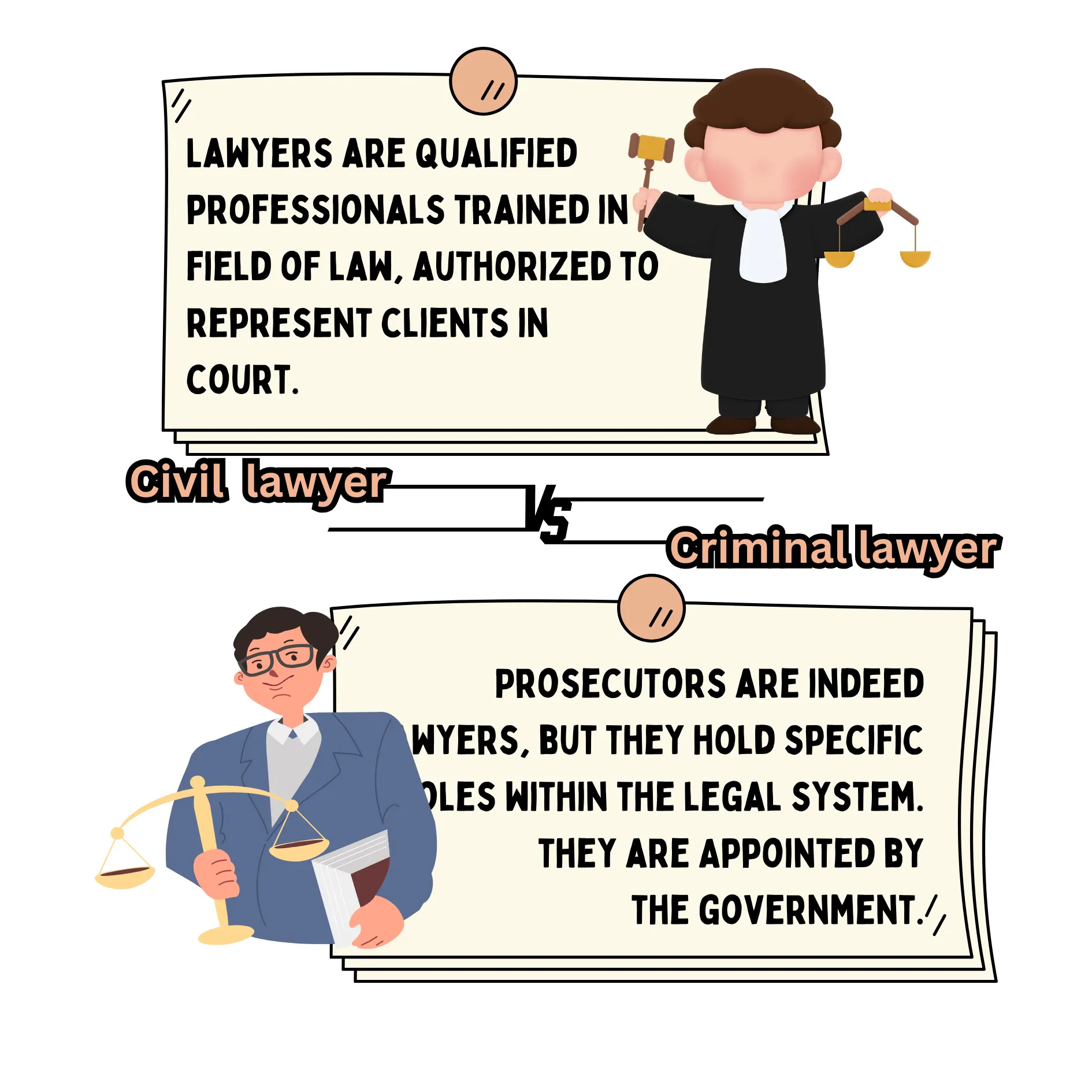
Civil Lawyer vs. Criminal Lawyer explained. Learn key differences, roles, duties, case types, skills, salaries, FAQs, and how to choose the right legal expert.
Understanding the legal system can be confusing—especially when trying to determine what type of lawyer you need. Two of the most common and essential branches of law are civil law and criminal law, each dealing with different types of disputes, different legal procedures, and different consequences.
At the heart of these two systems are two major types of lawyers:
- Civil Lawyers
- Criminal Lawyers
While both are legal professionals, the nature of their work, responsibilities, courtroom involvement, strategies, and client interactions vary significantly. This detailed guide explores everything you need to know about the differences between civil and criminal lawyers—including their roles, duties, case types, processes, education paths, skills required, and real-world examples.
Whether you are a student exploring law careers, a professional conducting research, or someone seeking legal help, this article will serve as your ultimate reference.
1. Understanding the Basics of Civil Law and Criminal Law
Before exploring the lawyers themselves, it’s essential to understand the two branches of law they work in.
1.1 What Is Civil Law?
Civil law deals with disputes between individuals, organizations, or institutions. These disputes usually involve rights, responsibilities, or obligations.
Common Civil Law Areas:
- Contract disputes
- Property conflicts
- Family law (divorce, custody, alimony)
- Employment disputes
- Commercial disagreements
- Personal injury (non-criminal)
- Defamation
- Intellectual property
- Probate and wills
Key Characteristics of Civil Law
- Goals: Compensation, dispute resolution, enforcement of rights
- Punishment: Usually monetary damages, injunctions, or specific performance
- Standard of proof: Preponderance of evidence (more likely than not)
- Parties: Plaintiff vs. Defendant
Civil cases often revolve around whether someone’s rights were violated or whether an agreement was breached.
1.2 What Is Criminal Law?
Criminal law deals with offenses against the state, society, or public order. In these cases, the government prosecutes the alleged offender.
Common Criminal Law Areas:
- Theft
- Assault and battery
- Domestic violence
- Drug crimes
- Fraud
- Murder and homicide
- Cybercrime
- DUI/DWI
- Sexual offenses
- Organized crime
Key Characteristics of Criminal Law
- Goals: Punishment, deterrence, rehabilitation, public safety
- Punishment: Jail, prison, fines, probation, community service
- Standard of proof: Beyond a reasonable doubt
- Parties: Government (prosecution) vs. Accused (defendant)
Criminal law determines what constitutes a crime and assigns appropriate penalties.
2. Who Is a Civil Lawyer?
A Civil Lawyer represents clients involved in non-criminal disputes. Their primary role is to help clients resolve legal conflicts and obtain compensation or enforcement of rights.
2.1 Roles and Responsibilities of Civil Lawyers
Civil lawyers carry out numerous tasks, including:
2.1.1 Legal Consultation
They help clients understand their rights, analyze their cases, and provide legal advice.
2.1.2 Drafting Legal Documents
Such as:
- Notices
- Contracts
- Wills
- Memoranda
- Agreements
- Lawsuits
2.1.3 Negotiation & Mediation
Civil lawyers often settle disputes outside court to save time and cost.
2.1.4 Representing Clients in Civil Court
During:
- Trials
- Motions
- Appeals
- Hearings
2.1.5 Conducting Legal Research
They study statutes, case laws, and precedents to prepare strong arguments.
2.2 Types of Civil Lawyers
Civil law covers several specializations:
- Family Lawyers
- Corporate/Business Lawyers
- Tax Lawyers
- Intellectual Property Lawyers
- Personal Injury Lawyers
- Real Estate Lawyers
- Employment/Labor Lawyers
- Immigration Lawyers
- Environmental Lawyers
Each specialization requires specific expertise and knowledge of niche regulations.
2.3 Common Civil Cases
Some examples of civil cases include:
- Divorce settlements
- Breach of contract
- Workplace harassment claims
- Tenant-landlord disputes
- Accident injury claims
- Wrongful termination
- Copyright infringement
3. Who Is a Criminal Lawyer?
A Criminal Lawyer represents individuals or entities accused of committing crimes. They may work as:
- Defense Lawyers (representing the accused)
- Prosecutors (representing the state)
3.1 Roles and Responsibilities of Criminal Lawyers
3.1.1 Legal Defense and Representation
Defending the accused to ensure a fair trial.
3.1.2 Investigating the Case
Including:
- Examining evidence
- Interviewing witnesses
- Reviewing police reports
- Consulting forensic experts
3.1.3 Plea Bargaining
Negotiating deals with prosecutors to reduce charges or penalties.
3.1.4 Courtroom Advocacy
Criminal lawyers are highly active in court.
They represent clients during:
- Bail hearings
- Trials
- Plea hearings
- Sentencing
- Appeals
3.1.5 Ensuring Legal Rights
They protect constitutional rights, such as:
- Freedom from unlawful search
- Right to counsel
- Right to remain silent
- Right to fair trial
3.2 Types of Criminal Lawyers
Criminal lawyers also specialize:
- White-Collar Crime Lawyers
- Cybercrime Lawyers
- Drug Crime Lawyers
- Domestic Violence Lawyers
- DUI Lawyers
- Violent Crime Lawyers
- Federal Criminal Lawyers
3.3 Common Criminal Cases
- Burglary
- Assault
- Murder
- Drug trafficking
- Cyber fraud
- Identity theft
- Kidnapping
- Sexual assault
4. Civil Lawyer vs. Criminal Lawyer: The Key Differences
Here is the core comparison:
4.1 Nature of Cases
Civil Lawyer:
Deals with private disputes—usually involving money, rights, or obligations.
Criminal Lawyer:
Handles cases involving crimes against society or the state.
4.2 Standard of Proof
Civil:
Preponderance of evidence (more than 50% likely).
Criminal:
Beyond reasonable doubt (highest legal standard).
4.3 Penalties
Civil:
- Monetary compensation
- Orders/injunctions
- Corrective actions
Criminal:
- Jail or prison
- Fines
- Probation
- Community service
4.4 Courtroom Involvement
Civil Lawyers:
Frequently settle outside court; fewer trials.
Criminal Lawyers:
Heavily involved in trials; courtroom strategy is essential.
4.5 Parties Involved
Civil:
Plaintiff vs. Defendant.
Criminal:
Government vs. Accused.
4.6 Representation
Civil Lawyers:
Representing individuals or companies.
Criminal Lawyers:
Represent either the government (prosecutors) or the accused (defense).
4.7 Education Focus
Civil Law Focus:
Contracts, torts, property, family law.
Criminal Law Focus:
Criminal procedure, evidence, forensics, constitutional law
4.8 Skill Set Difference
Civil Lawyer Skills:
- Negotiation
- Drafting
- Mediation
- Analytical writing
Criminal Lawyer Skills:
- Investigation
- Courtroom advocacy
- Interrogation
- Forensic analysis
5. Real-Life Examples of Civil & Criminal Cases
5.1 Civil Case Example
Breach of Contract Between Companies
Company A sues Company B for failing to deliver goods as promised. The civil lawyer negotiates for compensation or court-ordered enforcement.
5.2 Criminal Case Example
Assault Charge
A person is arrested for physical assault. The criminal lawyer defends the accused, negotiates plea deals, or fights the case in court.
6. Education Path to Become Each Type of Lawyer
Both require a law degree, but additional training differs.
6.1 Becoming a Civil Lawyer
- Law school with electives in corporate law, contracts, torts
- Internships with civil firms
- Practice licensing
- Optionally, LL.M in a civil specialization
6.2 Becoming a Criminal Lawyer
- Courses in criminal law, evidence, procedure
- Internships with criminal courts
- Trial advocacy training
- Work with defense offices or prosecution agencies
7. Salary Comparison: Civil vs. Criminal Lawyers
While salaries vary based on location, experience, and specialization:
Civil Lawyers:
Often earn more in corporate sectors, commercial law, or intellectual property.
Criminal Lawyers:
Public defenders earn less; private defense attorneys and prosecutors vary.
In general, top corporate civil lawyers often earn the highest salaries in the industry.
8. Which Lawyer Should You Choose?
Choose a Civil Lawyer if your case involves:
- Money disputes
- Property issues
- Divorce
- Contract breaches
- Employment matters
Choose a Criminal Lawyer if your case involves:
- Arrest
- Criminal charges
- Police investigation
- Bail
- Court trial for a crime
9. Civil Lawyer vs. Criminal Lawyer: Comparison Table
| Feature | Civil Lawyer | Criminal Lawyer |
|---|---|---|
| Nature of cases | Private disputes | Crimes |
| Standard of proof | Preponderance of evidence | Beyond reasonable doubt |
| Penalties | Compensation, injunctions | Jail, fines, probation |
| Parties | Plaintiff vs. Defendant | Government vs. Accused |
| Court involvement | Moderate | High |
| Skills | Negotiation, drafting | Trial advocacy, investigation |
| Common clients | Individuals, businesses | Accused individuals, state |
| Education focus | Contracts, torts | Criminal procedure, evidence |
10. Conclusion
Civil lawyers and criminal lawyers play equally crucial roles in the justice system, but their work differs dramatically. While civil lawyers focus on resolving disputes and obtaining compensation, criminal lawyers ensure justice in crimes and protect constitutional rights.
Understanding these differences helps individuals choose the right lawyer and helps students decide their ideal legal career path.
Also Read : Become Your Own Boss – Start a Lucrative Freelance Career
sources :
https://thelaw.institute/introduction-to-law/civil-vs-criminal-law-key-differences/The Law Institute
FAQs :
1. Which lawyer earns more: civil or criminal?
Civil lawyers in corporate sectors often earn more, but high-profile criminal defense attorneys can earn significantly.
2. Can a lawyer practice both civil and criminal law?
Yes, many lawyers handle both, but specialists are generally more effective.
3. Who is needed for divorce?
A civil lawyer, specifically a family law attorney.
4. Who represents someone accused of a crime?
A criminal defense lawyer.
5. Does a civil case ever lead to jail time?
No—civil cases result only in compensation or legal orders, not imprisonment.